
LAMM returns to Salone del Mobile.Milano. From 21 to 26 April (Hall 24, Stand D34), the Italian company – a leader in the production and installation of seating systems for conference halls, auditoriums, universities, cinemas, theatres, and collective spaces – will be present at the world’s largest international trade fair dedicated to furniture and design. The brand will welcome visitors while presenting some of its most advanced solutions: seating and study desks conceived to meet contemporary design requirements and aligned with the ongoing evolution of workspaces. The participation is further enhanced by the presence of its sister company Caruso Acoustic, manufacturer of sound-absorbing panels for acoustic and visual comfort.
On display will be LAMM’s most innovative products, expressing solutions consistent with new ways of working and learning, as well as with the central theme of Workplace 3.0, the Salone’s annual exhibition that this year explores furnishings capable of improving professional, social and creative experiences in work environments – a theme interpreted by exhibiting companies with a forward-looking perspective.
Inside the stand – conceived not only as an exhibition area but as an immersive experience and designed by Dante Bonuccelli – visitors will discover innovative patented seating solutions featuring integrated rechargeable battery systems, together with new exclusive study desks with fully integrated touchscreen monitor/PC units. The display will also include LAMM’s iconic seating installed on floor technology systems that allow concealed movement beneath the flooring.
Flexibility, technology, and refined design characterize both the showcased products and the new stand, whose sophisticated architectural language draws inspiration from Ludwig Mies van der Rohe’s principle of “less is more”. «To evoke a sense of elegance and minimalism, the stand is conceived as a museum-like exhibition route. The space unfolds through an orderly sequence of environments guiding visitors through a slow, contemplative experience. The armchairs, positioned at the centre, are treated as artworks: isolated, enhanced and almost suspended within a neutral yet vibrant architectural envelope», states architect Bonuccelli.
Elegance emerges as the perfect symbiosis between form, function, and innovation – both in the products and in the stand, which embodies the company’s values. LAMM is constantly engaged in ongoing research into materials, ergonomics, comfort, design and technology, anticipating and meeting a wide range of design requirements.
Latest news
Also this year, LAMM renews its partnership with FSC® Italy...
LAMM at SEE – Salon de l’Expérience Étudiante
LAMM is pleased to announce its participation, in collaboration with distributor ATOMA...
LAMM – The next steps of design
Keep updated on
The Grown-Up Version of Sustainability
In an industry increasingly focused on sustainability, the most meaningful solution is often the simplest:
make great products that last, and keep them working.
The Anonima Castelli Axis system embodies this philosophy. Designed as a component-based seating platform, individual elements can be repaired, replaced or upgraded without discarding the whole installation. Instead of sending furniture to landfill, the system allows seating to be restored, refreshed and returned to service.
This approach — known as Ripristino — represents a more mature view of sustainability:
not just recycling materials, but extending the life of good design.
Because the most sustainable chair is often the one that’s already been made.
Learn more:
https://www.anonimacastelli.com/en/pages/ripristino


Mix Awards Categories 2026
Mix Awards Categories 2026
Awards don’t just celebrate outcomes — they influence briefs, client expectations and procurement priorities. The categories themselves offer a useful snapshot of what the market is starting to value more deeply.
Mix Awards Categories 2026
Product of the Year Bathroom
Product of the Year Flooring
Product of the Year Furniture
Product of the Year Lighting
Product of the Year Seating
Product of the Year Surfaces
Product of the Year Technology & Accessories
Project of the Year Bar & Leisure Interiors
Project of the Year Design & Build
Project of the Year Fast Forward - NEW for 2026
Project of the Year Hotel Interiors
Project of the Year Identity - NEW for 2026
Project of the Year Inside Out
Project of the Year Living Interiors
Project of the Year Positive Impact
Project of the Year Public Sector & Cultural Interiors
Project of the Year Workplace Interiors Sub 5,000 sq ft
Project of the Year Workplace Interiors 5,000 - 15,000 sq ft
Project of the Year Workplace Interiors 15,000 – 30,000 sq ft
Project of the Year Workplace Interiors 30,000 - 70,000 sq ft
Project of the Year Workplace Interiors Over 70,000 sq ft
Design Practice of the Year - 50+ Employees
Design Practice of the Year - Under 50 Employees
Manufacturer of the Year

Selecting the Best Chair for Your Space
An expert guide to design, comfort, usability, colour, sustainability, aesthetics, functionality and price
Introduction
Choosing the right chair isn’t just about seating — it’s about how people experience and interact with your space. The perfect chair balances design, comfort and practicality, while respecting budget constraints and long‑term performance. This guide will walk you through key considerations to help you specify seating that elevates your interiors and supports your project goals.
1. Understand the Purpose of the Space
Before you select a chair, define how it will be used:
Workspaces: Ergonomics and adjustability are essential for daily use.
Meeting & Conference Areas: Prioritise comfort for extended periods without compromising visual cohesion.
Reception & Lounge Spaces: Make a strong first impression with inviting and striking seating.
Multipurpose Zones: Expect flexibility — stackable or folding chairs can adapt to changing needs.
Your choice should reflect how the user will engage with the seating day after day.
2. Design & Aesthetic Harmony
A chair isn’t just functional — it’s a design statement. A well‑designed chair complements architectural style and enhances ambience.
Proportion & Scale: Ensure the chair’s silhouette works with the room’s ceiling height and furniture scale.
Timeless vs Trend: Contemporary pieces can feel fresh, while classic European design often offers enduring character.
Cohesion: Coordinate materials and finishes with your overall palette.
We can help with multiple approaches — from lightweight folding solutions to more expressive lounge seating — all rooted in thoughtful European design language.
3. Comfort & Ergonomics
Irrespective of style, comfort is non‑negotiable.
Seat depth & height: Match human scale for your audience (e.g., visitor areas vs meeting rooms).
Backrest support: Consider curvature and posture support.
Cushioning & upholstery: Upholstery choice influences comfort and acoustics, as well as maintenance.
Well‑designed seating accommodates a range of body types and supports good posture, which is vital in work and hospitality environments.
4. Usability & Functionality
Today’s interiors demand more from seating than ever before.
Stackable & Foldable: Ideal where flexibility and storage efficiency are required.
Mobility: Lightweight chairs facilitate quick reconfiguration.
Task‑Ready: Chairs that are easily cleaned and maintained extend lifecycle value.
Whether chairs nest, fold flat or stack, usability features save time and space.
5. Materials & Sustainability
Sustainable design matters. Consider:
Recycled or responsibly sourced materials.
Durable constructions that withstand heavy use.
Low‑impact finishes and fabrics.
European‑designed seating often leads in thoughtful material selection — blending durability with ecological consideration.
6. Colour, Texture & Finish
Colour has a powerful emotional impact. Consider your palette:
Neutrals for longevity and versatility.
Accent tones to tie in branding or highlight a zone.
Texture combinations like soft textiles or mixed materials for visual richness.
Strategic use of colour and finish contributes to aesthetic alignment and user experience.
7. Price & Value
Price should reflect value over time, not just initial cost.
Longevity: Better‑made chairs last longer and look better longer.
Serviceability: Replaceable parts and good warranty support reduce total cost of ownership.
Project Fit: Choose seating that fits the intended lifecycle of the space.
Smart specification always considers both short‑term budget and long‑term performance.
Conclusion: Make the Right Choice
Selecting a chair is part art, part science — demanding design sensitivity and function‑first thinking. With expert guidance and access to quality European seating options, you can specify solutions that impress visually, perform reliably and deliver lasting value.
Ready to find the perfect seating for your next project?
Talk to us at Chart Interiors for tailored recommendations and support throughout your specification journey.
Explore inspiring seating solutions and speak with an expert at www.chartinteriors.com — helping you choose the right chair for every space.

The Waiting Place
The Waiting Place
DESIGN MATTERS 03
A series of design stories from Chart Interiors, exploring the ideas, people and products behind the manufacturers we represent.
In this edition, we explore Leyform and how thoughtful seating design can shape the human experience of waiting — through comfort, dignity and a sense of belonging.
We design places for people to wait. But how often do we consider what they're waiting for?
We rarely know what someone is carrying when they enter a waiting room.
Anxiety about an appointment. The exhaustion of a difficult day. The uncertainty of what comes next.
For some, waiting is simply a pause between activities. For others, it can be one of the most vulnerable moments of their day.
Yet waiting is such a familiar part of life, and the spaces designed for it don't always reflect the people who use them.
So perhaps the question isn't simply where people should sit.
Perhaps it's how we can make them feel considered while they're there.
Noà by Leyform — creating a sense of personal space within shared environments.
Dignity by design
In a hospital in Monaco, Leyform was asked to consider something deceptively simple: how easily patients could sit down and stand up again.
For elderly patients and those experiencing mobility difficulties, the height of a seat can make a significant difference to their independence and comfort.
Working with its modular Ola seating system, Leyform introduced thicker seat padding and custom spacers to raise the overall seating height.
The adaptations were subtle, but their purpose was significant: to make an everyday movement easier for the people using the space.
Ola also offers different backrest heights and flexible configurations, allowing seating arrangements to respond to different environments and requirements.
Because dignity in design isn't always about making a grand statement. Sometimes it's about removing a small but very real difficulty from someone's day.
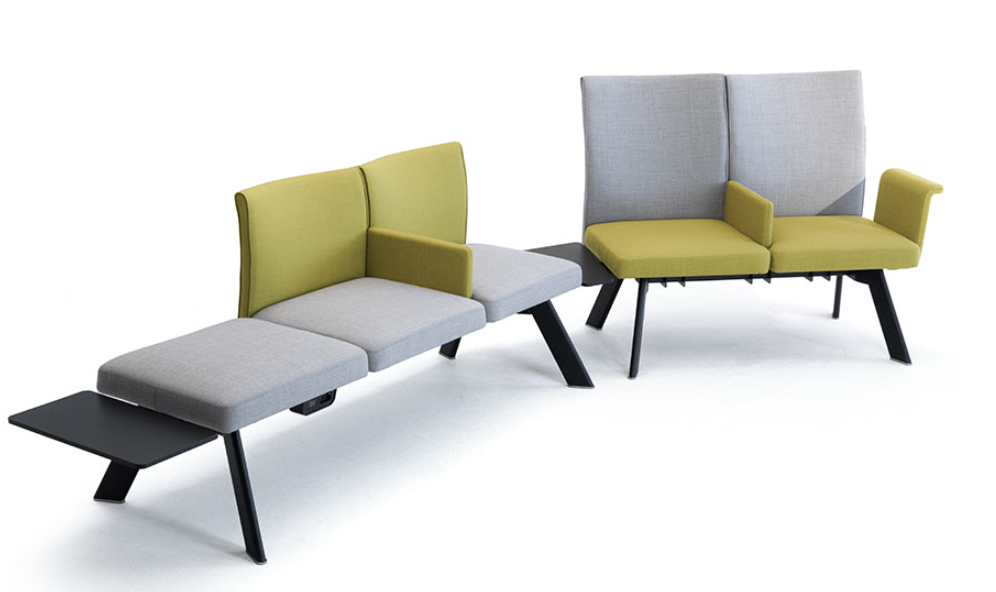
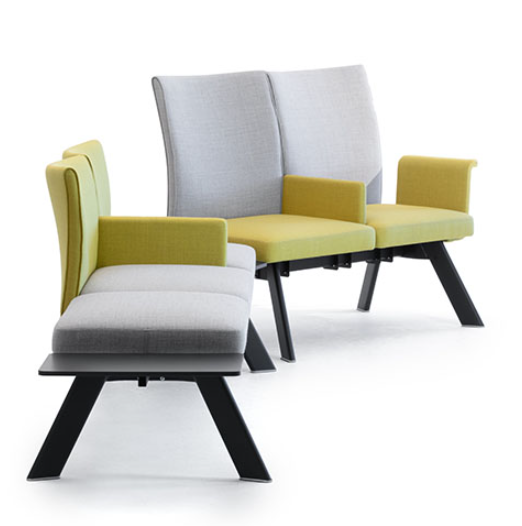
Ola by Leyform — modular seating with high and low backrest options. For the Monaco hospital project, Leyform also developed bespoke adjustments to seat height and padding to improve accessibility and comfort.
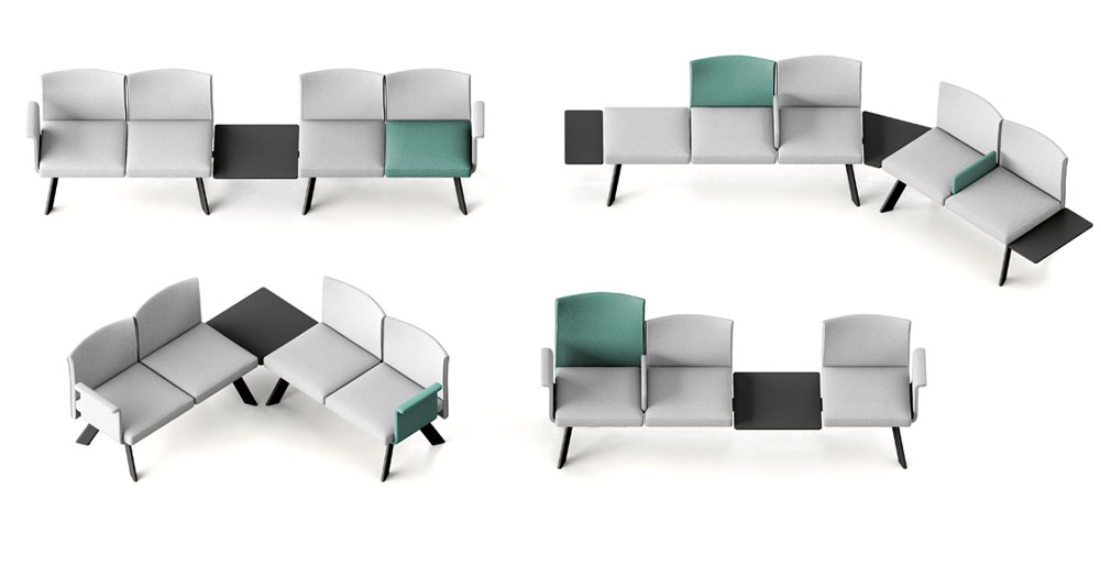
Ola by Leyform — modular configurations that respond to different spaces and architectural layouts.
The architecture of calm
A library asks something very different of its furniture.
Rather than simply accommodating people as they pass through, it invites them to stay. To read, reflect, concentrate or spend a little time away from the pace of everyday life.
At the Dammam Library in Saudi Arabia, Leyform's Lizzy seating and Gogo pouffes were selected in soft pastel tones, creating an inviting contrast with the surrounding architecture.
The furniture contributes to an environment where people can find their own way to occupy the space — whether settling into a chair with a book or gathering more informally.
It's a reminder that comfort isn't only physical. Colour, proportion and the arrangement of furniture all help shape how a space feels.
Sometimes the most welcoming spaces are those that give us permission to slow down.
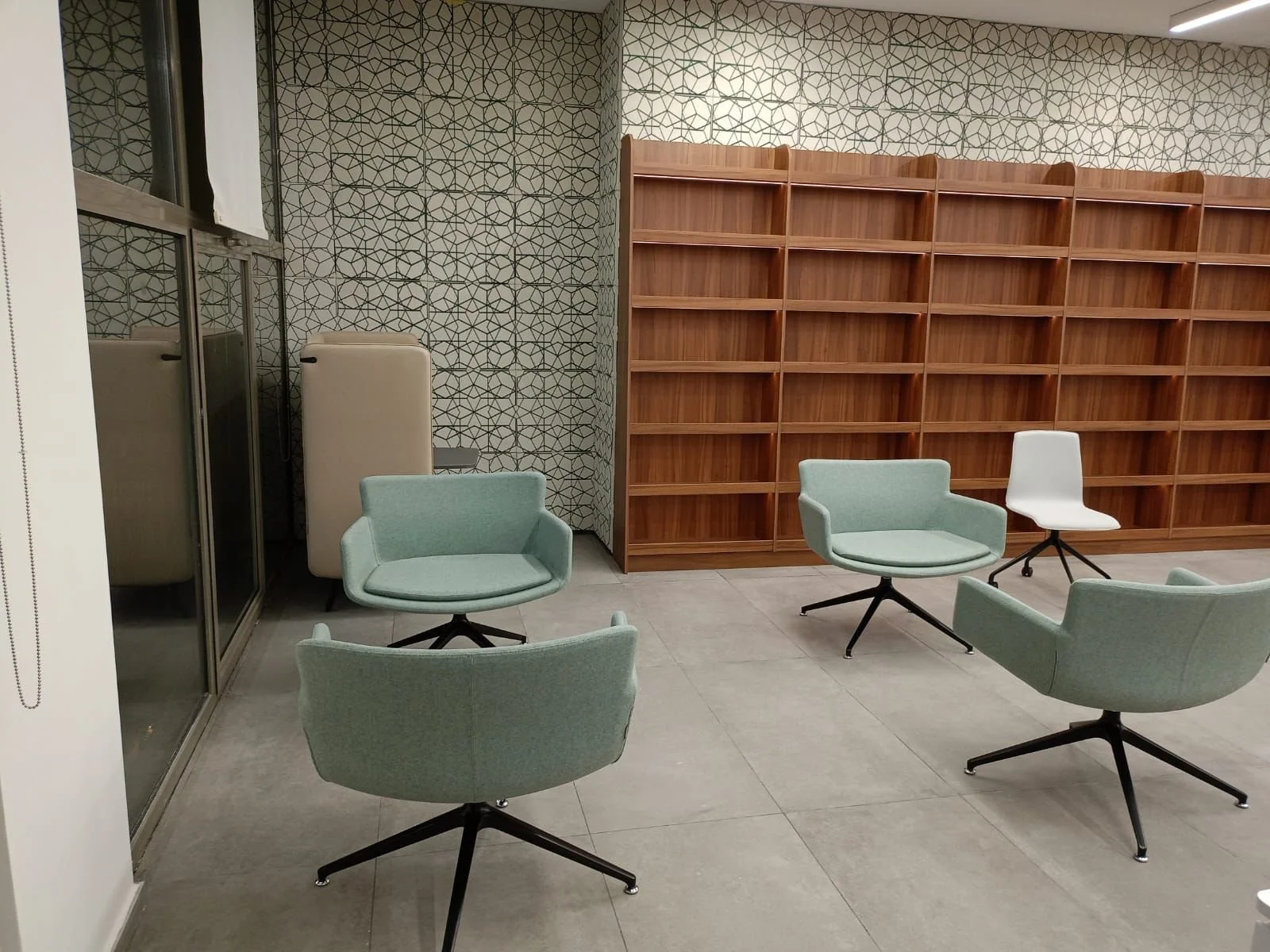
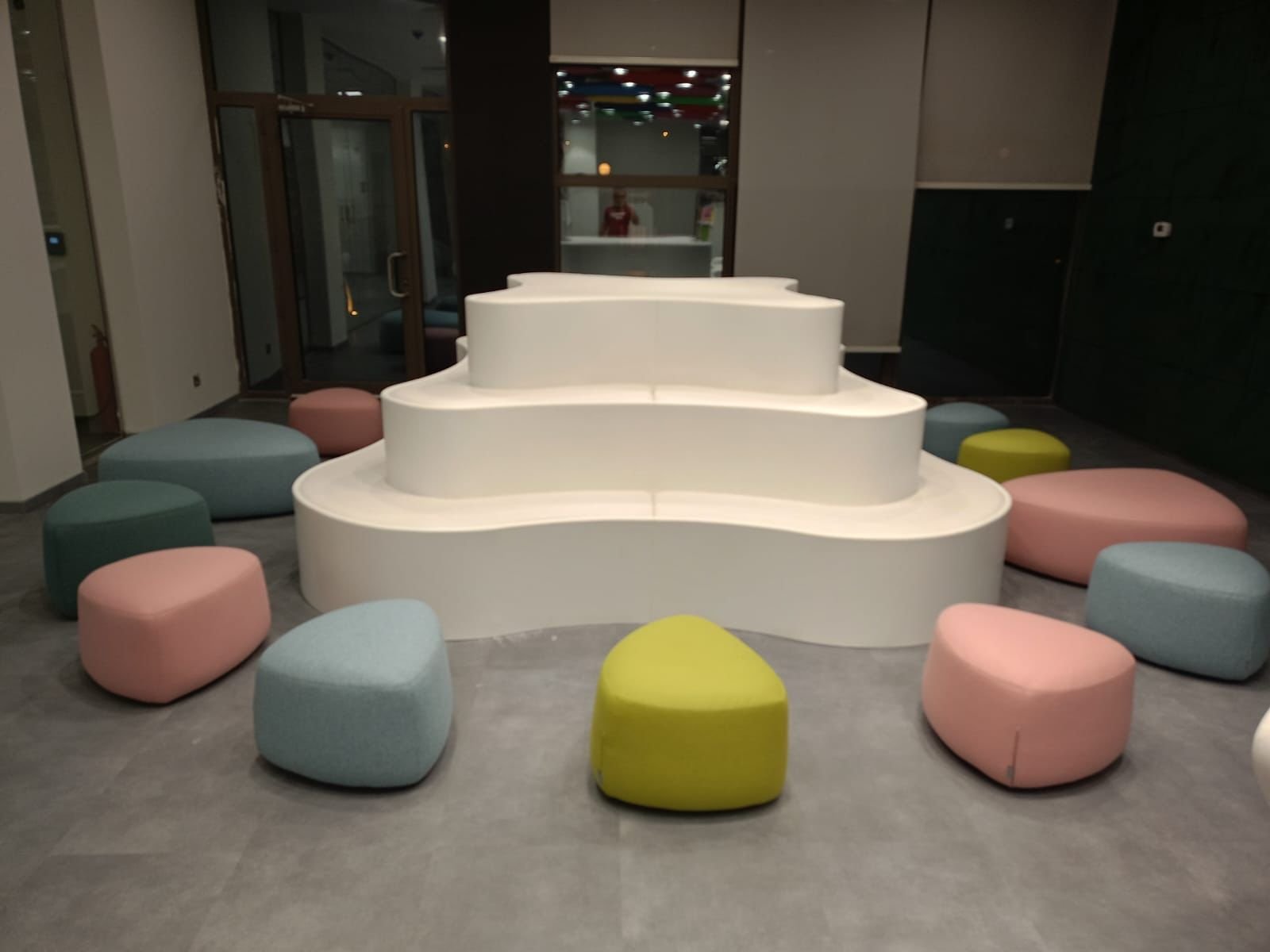
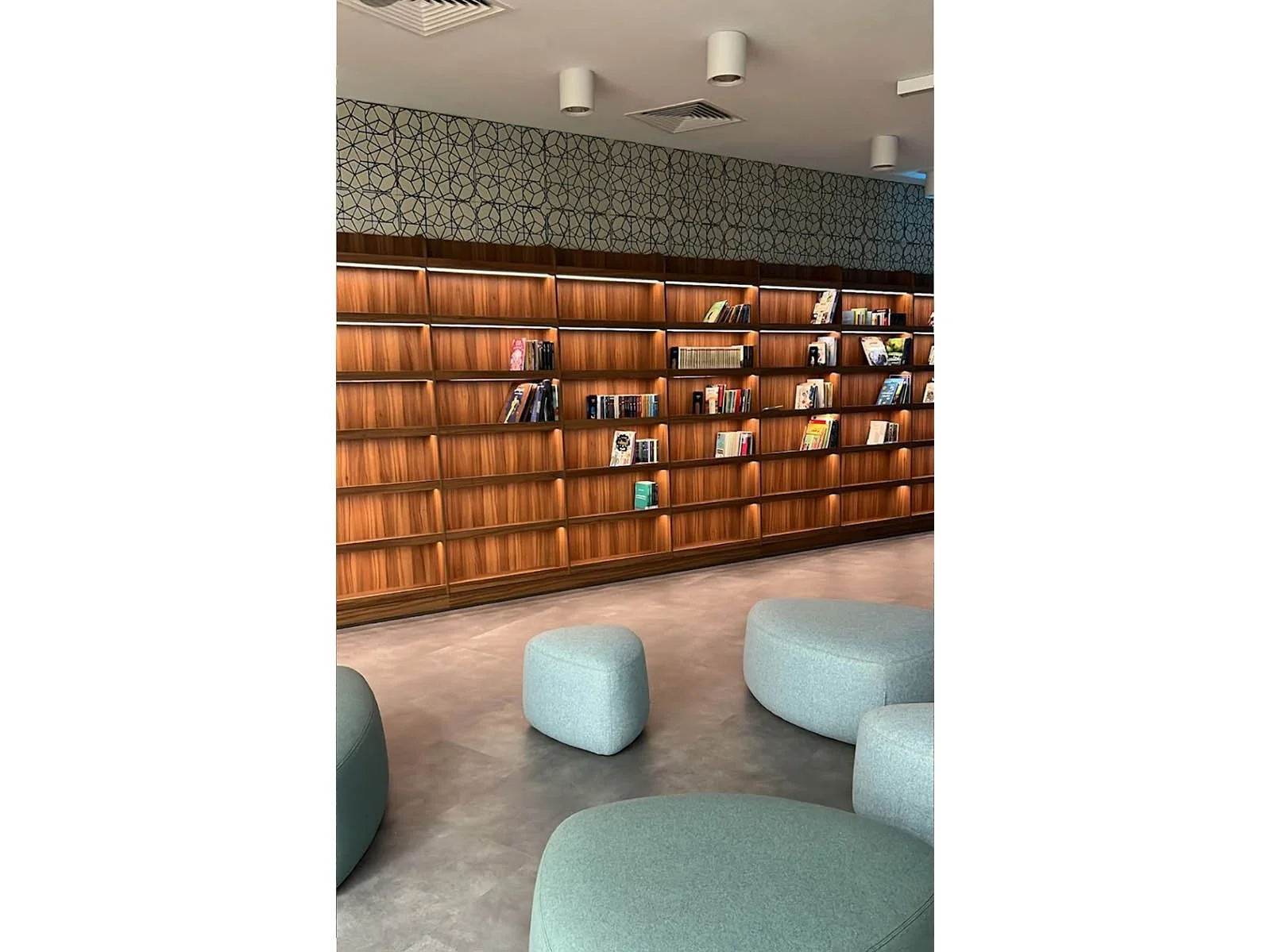
Biblioteca Dammam, Saudi Arabia — Lizzy seating and Gogo pouffes by Leyform. Project: Milano International.
A little space of our own
In busy public environments, privacy isn't always about having a separate room.
Sometimes it's about creating a sense of personal space within a larger, shared setting.
Leyform's Noà collection explores this idea through what the manufacturer describes as a micro-architecture of privacy — upholstered forms that help define smaller, more sheltered spaces within an open interior.
Its design philosophy considers enclosure, acoustic protection and a sense of security, recognising that even in communal environments, people don't always want to feel exposed.
It's an interesting reminder that the experience of a space isn't determined by its size alone, but by how we feel within it.
Sometimes a little separation can make a shared space feel more welcoming.
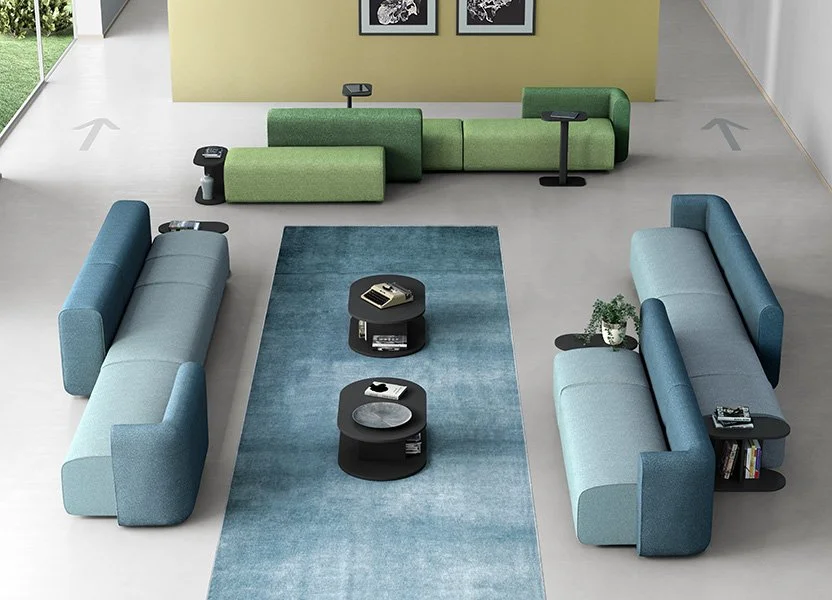
Noà by Leyform — using modular seating to create smaller, more intimate settings within open, shared spaces. A thoughtful balance between connection and personal space.
Leyform's Around Box explores another dimension of personal space — creating a welcoming, home-from-home retreat within a shared environment.
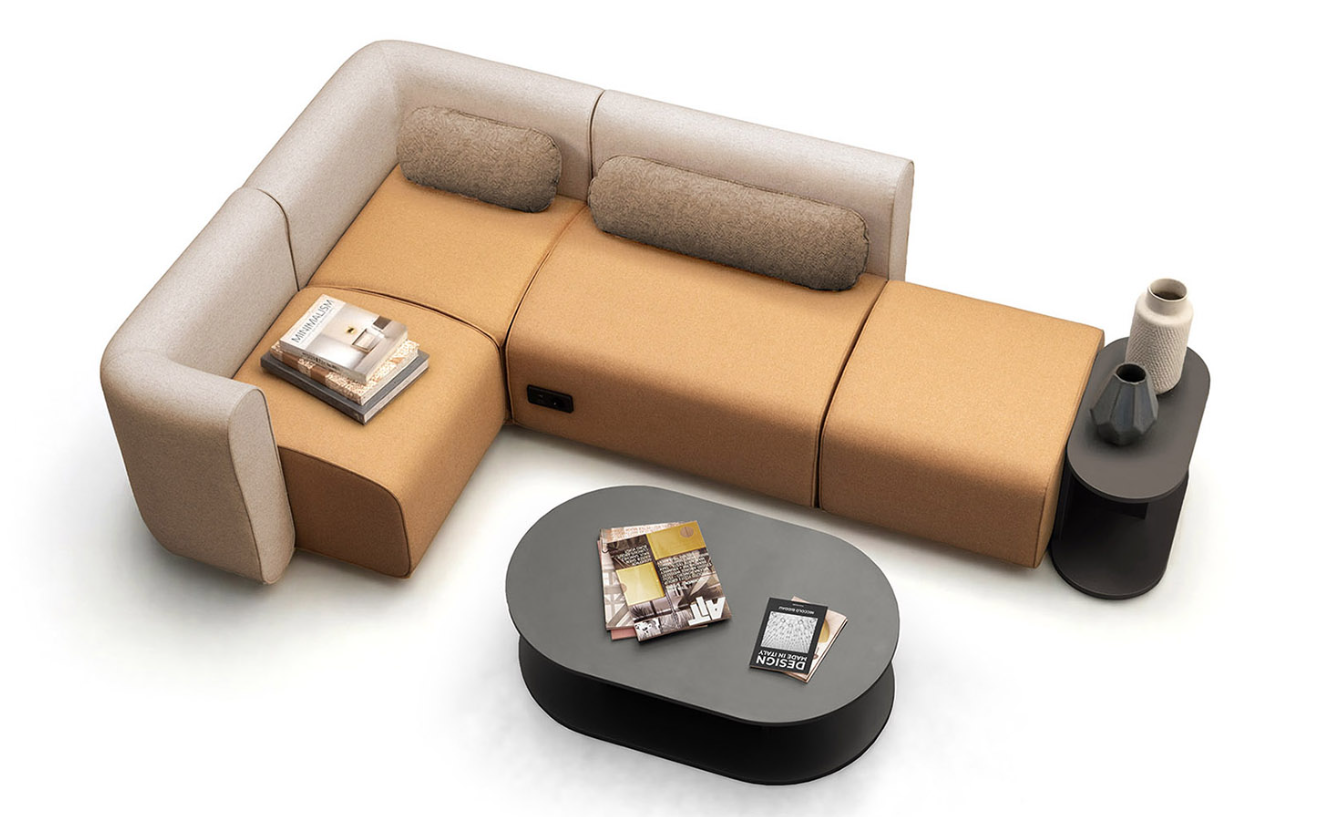
With its high, softly upholstered sides and inviting proportions, it offers a cocoon-like sense of shelter from the activity around it. Somewhere to settle, gather your thoughts, read, catch up on work or simply enjoy a moment to yourself.
Thoughtful details, including a convenient surface and integrated power, bring everyday practicality into a setting that feels reassuringly domestic.
Because sometimes, feeling comfortable begins with feeling sheltered.
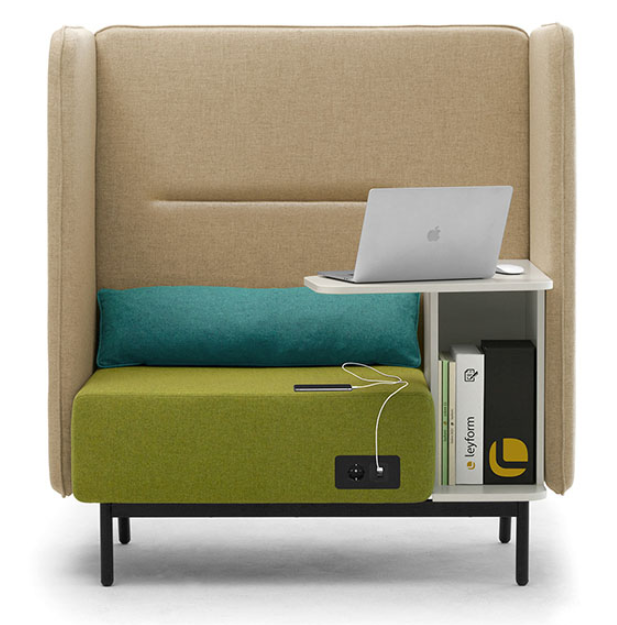
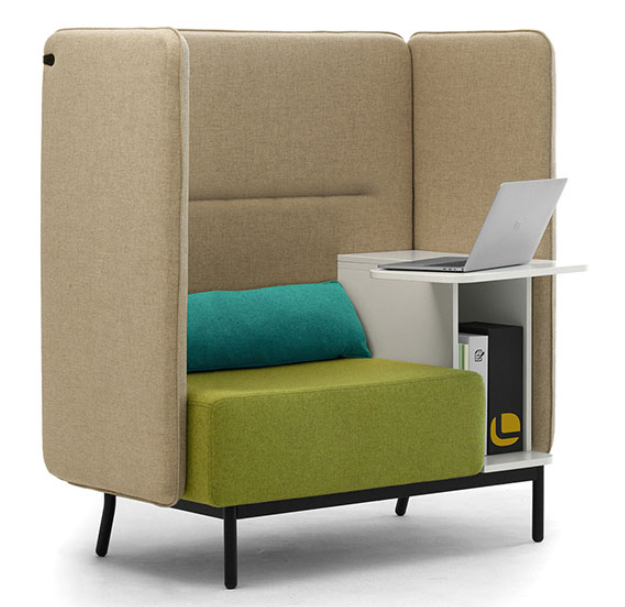
Around Box by Leyform — a softly upholstered, cocoon-like retreat offering comfort, personal space and everyday convenience within shared environments.
Designing for people, not just places
A hospital waiting area. A library. A shared public space.
Different environments, different expectations. But each asks something of the people who use it.
For architects and designers, the challenge goes beyond selecting furniture that fits a floor plan. It's about recognising the different ways people experience a space — and how even small design decisions can make those experiences better.
Accessibility, durability and practicality will always matter. But so do reassurance, comfort and the freedom to find a little space of our own.
Because the best spaces don't simply accommodate people. They make people feel understood.
Discover more with Chart Interiors
Chart Interiors works with architects and designers to explore thoughtful seating solutions for healthcare, education and shared public environments.
Discover Leyform's collections, or talk to us about creating spaces that consider the people who use them.
What happens when a room needs to change?
DESIGN MATTERS 02
A series of design stories from Chart Interiors, exploring the ideas, people and products behind the manufacturers we represent. In this edition, we turn the spotlight on LAMM.
We design buildings to last. But increasingly, the spaces within them need to do something rather different: adapt.
A lecture room becomes a collaborative workspace. A meeting space becomes a presentation room. A training environment may need to accommodate entirely different groups and ways of working from one hour to the next.
For architects and designers, that creates an interesting challenge.
How do you design for a use that might change before the building does?
At Chart Interiors, it’s one of the reasons we find LAMM’s approach to flexible spaces particularly compelling.
And one product provides a deceptively simple example.
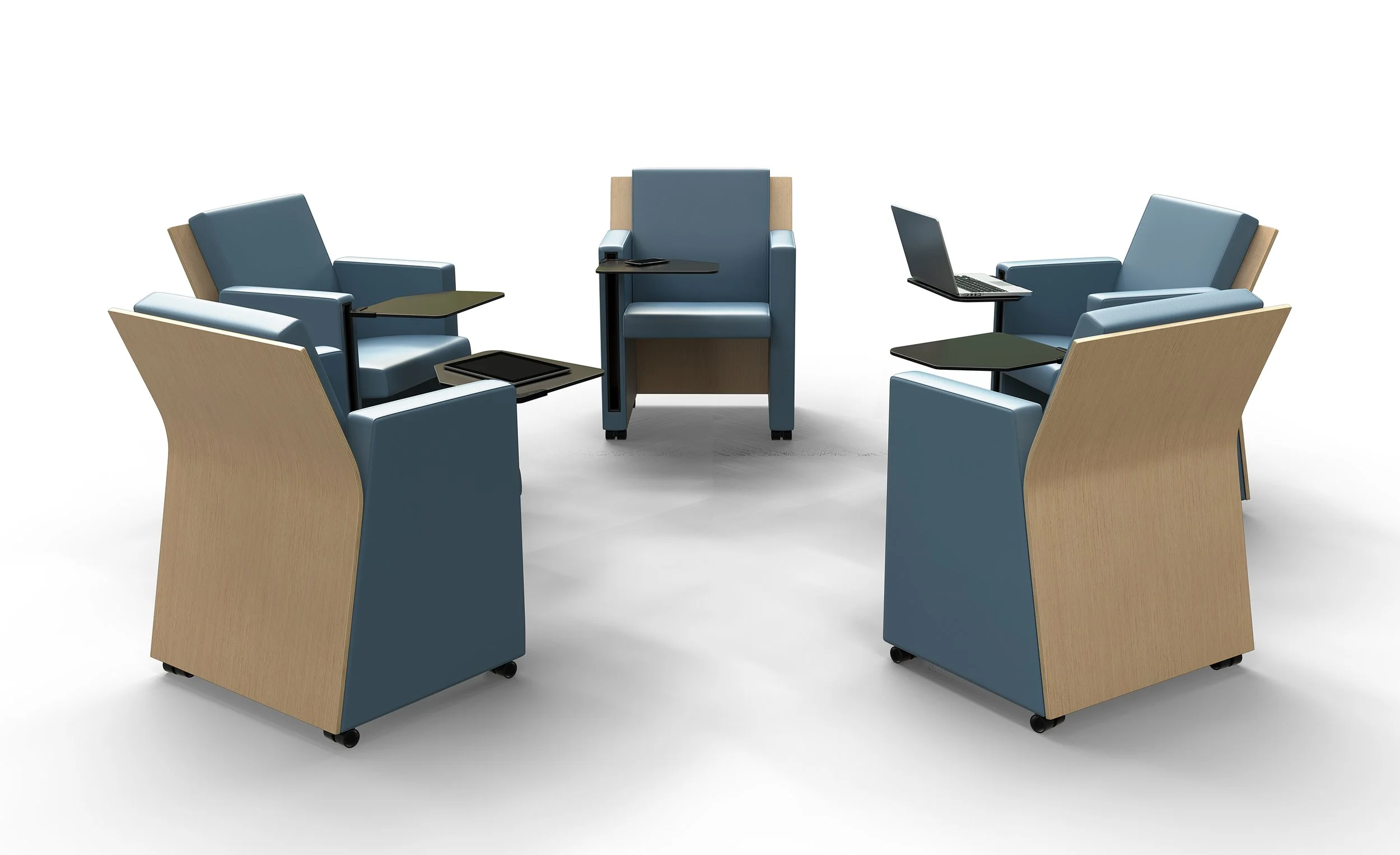
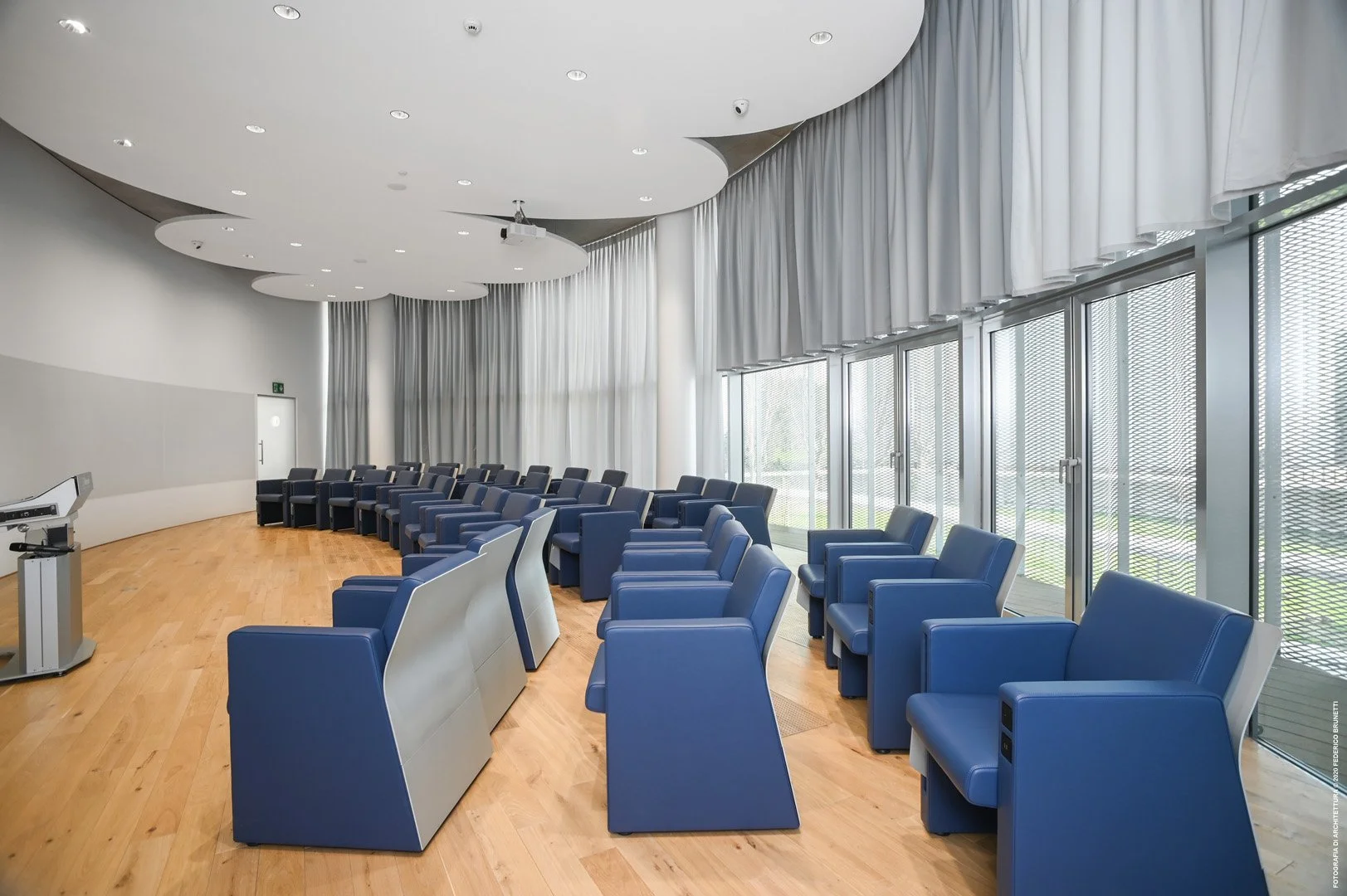
LAMM Flexa Move mobile seating with writing tablets, designed by Dante Bonuccelli
FLEXA MOVE
Designed by Dante Bonuccelli, Flexa Move takes the familiar idea of an auditorium or conference chair and removes one of its most fundamental constraints: its fixed position.
Its self-supporting structure and four swivel wheels allow individual seats to be moved and spaces to be reconfigured quickly, while an optional fold-away writing tablet allows the chair to function as an individual workspace.
The idea is simple, but the implications are rather bigger.
Instead of designing a room around a permanent furniture layout, what if the furniture could respond to the room?
DESIGNING FOR CHANGE
Buildings are long-term investments. The way we use them is not.
Teaching methods evolve. Teams move between individual and collaborative work. Technology changes. And spaces designed for one purpose are increasingly expected to accommodate several.
For architects and designers, flexibility therefore becomes more than simply making furniture movable. It is about reducing the fixed elements that determine how, where and when a space can be used.
Flexa Move addresses one of those constraints by allowing the seating itself to move with the needs of the space
But what happens when the furniture can move — and the technology can’t?
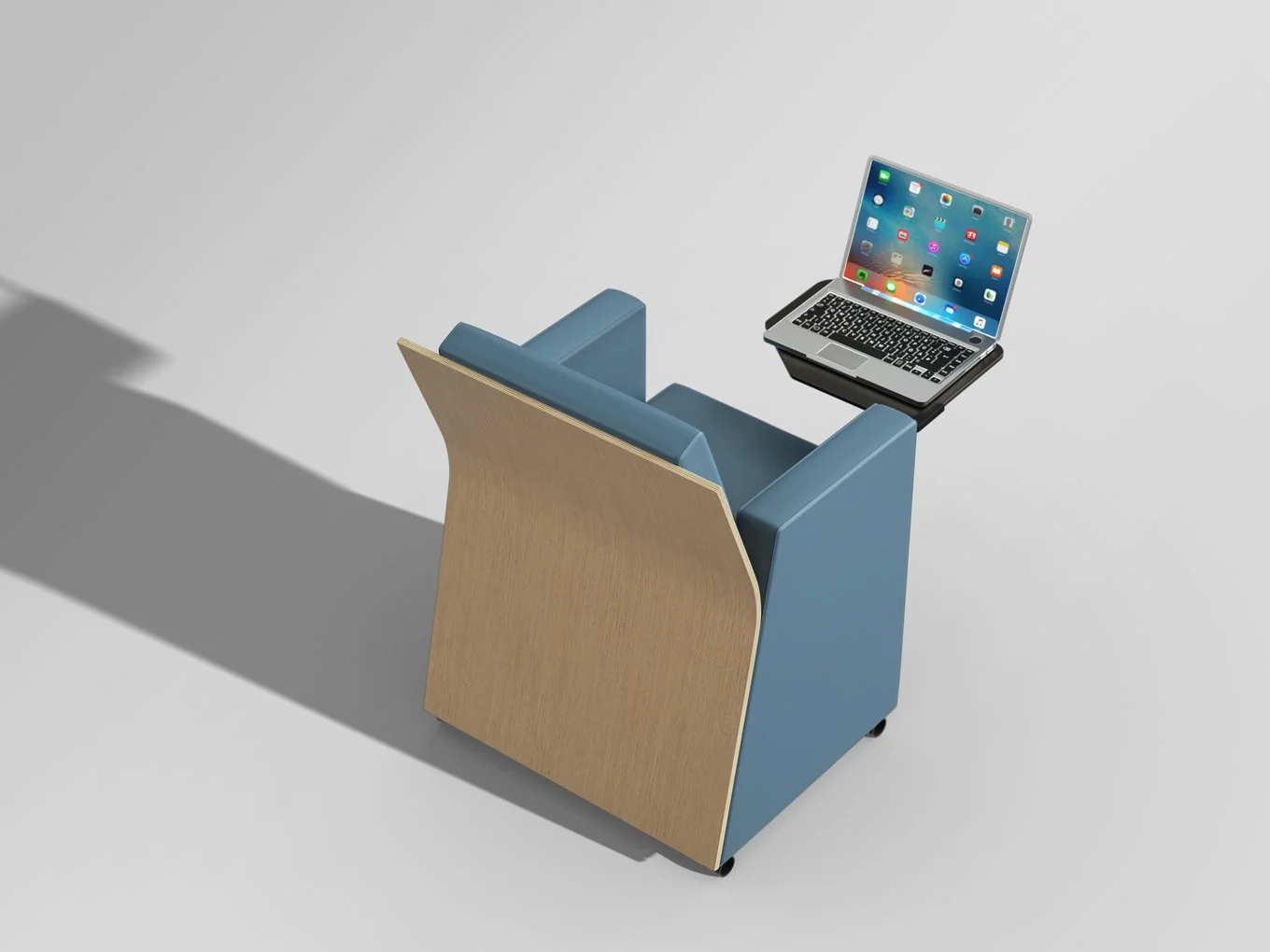
Flexa Move Battery with integrated rechargeable power
FLEXA MOVE BATTERY
In 2026, LAMM took the idea of flexibility one step further.
Flexa Move Battery integrates LAMM's patented rechargeable power technology within the chair, allowing laptops, tablets and other devices to be powered without connecting the seating to a fixed electrical supply.
It removes another physical constraint from the room: the cable.
For learning, meeting and collaborative environments, that means furniture and technology can move together — allowing layouts to change without the availability of floor boxes or wall sockets dictating where people can work.
True flexibility isn't simply about what can move. It's about what no longer needs to stay fixed.
DESIGNING FOR WHAT COMES NEXT
Designing for the future doesn't necessarily mean predicting exactly what comes next.
It can also mean building in enough adaptability to respond to it — new technology, different ways of working, changing teaching methods or simply a different group of people.
Flexa Move is one example of how a relatively small design decision can have a much wider effect on the way a space performs.
Because sometimes designing for the future means leaving room for change.
Discover more with Chart Interiors
Chart Interiors represents a carefully selected portfolio of furniture manufacturers, connecting distinctive design with projects across the UK.
Explore the LAMM collection, or talk to us about flexible spaces for your next project
Because good design lasts
DESIGN MATTERS 01
A series of design stories from Chart Interiors, exploring the ideas, people and products behind the manufacturers we represent. In this edition, we turn the spotlight on Anonima Castelli.
Anonima Castelli · Plia · Giancarlo Piretti
What makes a piece of furniture last?
Not simply survive, but remain relevant – still useful, still desirable and still capable of looking entirely at home decades after it was designed.
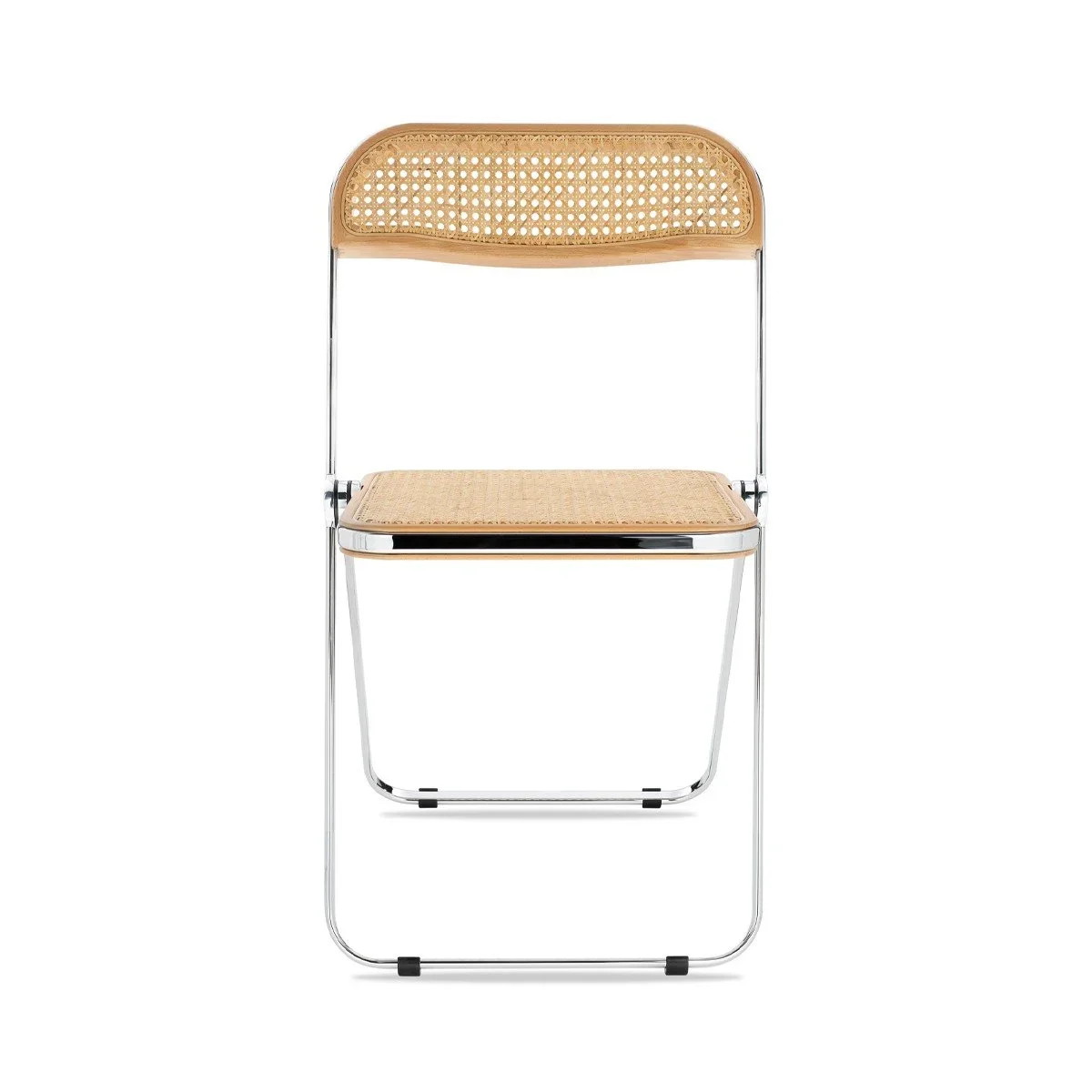
Few pieces demonstrate that better than Plia, designed by Giancarlo Piretti for Anonima Castelli in 1967.
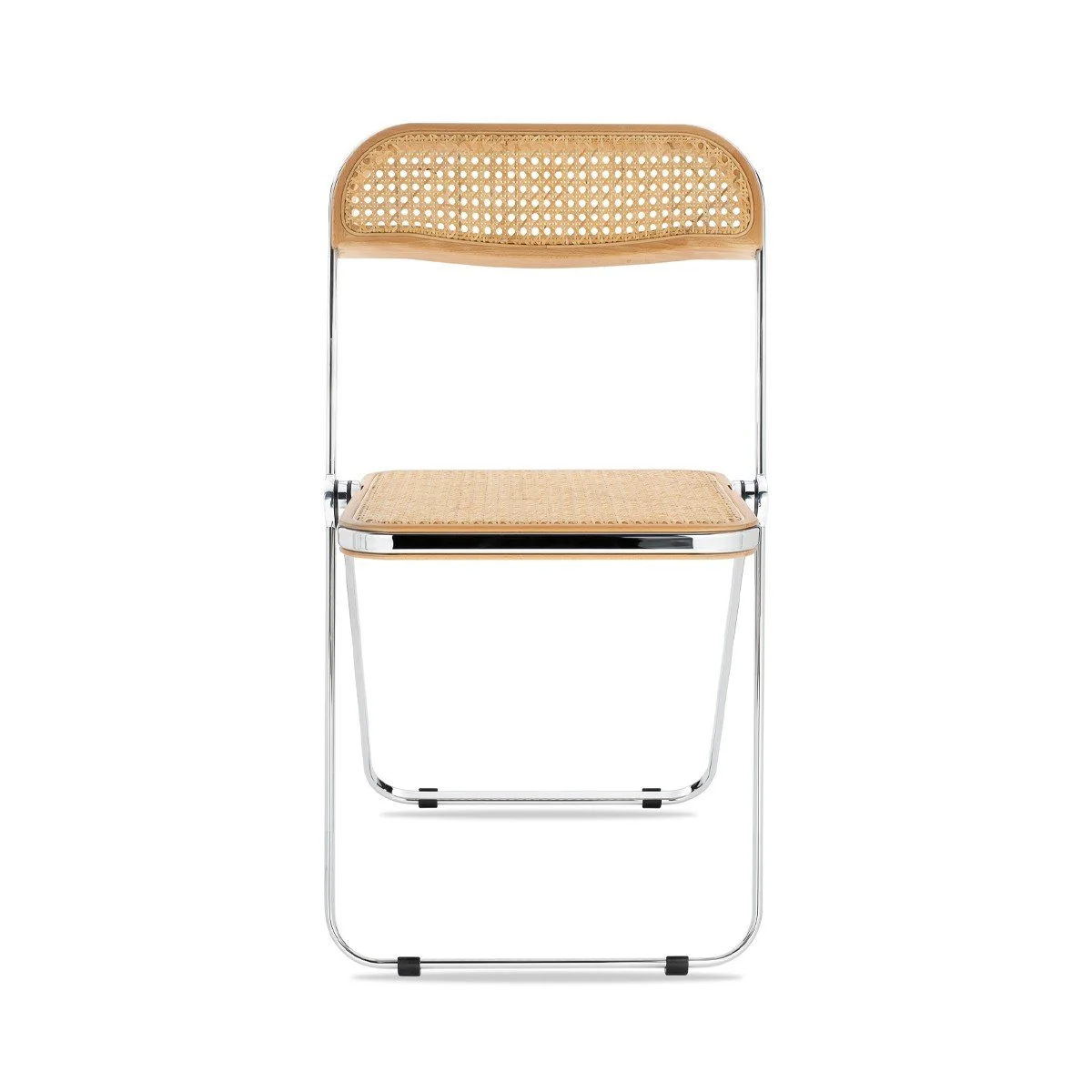
Plia by Giancarlo Piretti for Anonima Castelli. Designed in 1967.
A simple idea. A difficult thing to achieve.
In 1967, Giancarlo Piretti designed a folding chair that did something rather clever. Plia took an object usually regarded as purely functional and turned it into a piece of considered industrial design.
At its heart was Piretti's ingenious three-disc joint: a single mechanism that allowed the seat, back and frame to fold together. The result was elegant, compact and remarkably simple to use.
But perhaps the more interesting part of the story is what happened next.
Plia didn't disappear when tastes changed. It became part of the permanent collection of the Museum of Modern Art in New York, sold in its millions, and remains in production today.
Almost sixty years later, the design still works.

Plia mechanism
Good design doesn't stand still.
Longevity doesn't mean freezing a product in time.
Over the decades, Plia has appeared in different materials, colours and finishes, while the clarity of Piretti's original idea has remained remarkably intact.
That's an important distinction. Design heritage is valuable, but only when it continues to have relevance.
A chair designed in 1967 still has to earn its place in a project in 2026 – through function, proportion, material choice and the way it responds to contemporary interiors.
The best designs don't simply belong to their period. They outlive it.
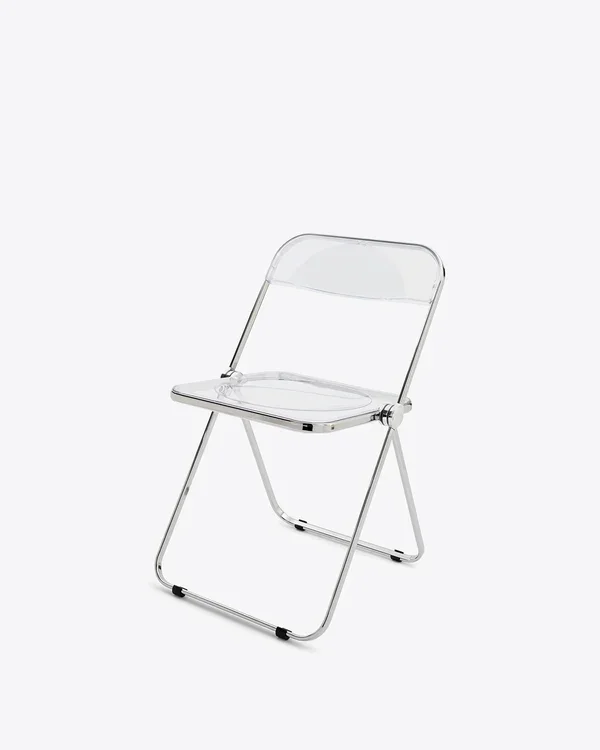
Plia in transparent polycarbonate – the original design reinterpreted for contemporary interiors.
Discover more with Chart Interiors
Chart Interiors represents a carefully selected portfolio of furniture manufacturers, connecting distinctive design with projects across the UK.
Explore the Anonima Castelli collection or get in touch to discuss your next project.